If you need more leads as a financial advisor, you need conversations with people who might actually hire you. A name in a spreadsheet is not that.
Firms usually mix a few sources. Some people already know you. Some are searching for help today. Some have never heard of you, and you reach them first. What to try first depends on how soon you need meetings, who you want to work with, and who on your team will follow up.
This article covers the main options, what each one asks of you, and how to keep score without treating every inquiry as a client.
Key takeaways
- Start with people who already know your work. A specific ask beats waiting.
- Count contacts, conversations, attended meetings, and new clients separately.
- Search ads can reach people who are already looking. Social ads can reach people who fit a description. Neither one replaces follow-up.
- LinkedIn, useful pages, events, and professional partners take longer. Stay specific if you use them.
- Do not buy a channel you cannot staff. Extra names do not create extra hours.
- Get a current written quote before you budget for any paid service.
- Have your compliance reviewer check ads, pages, emails, and outreach before they go live. This is marketing help for your firm, not legal advice and not investment advice.
Where advisor leads actually come from
You do not need every channel on day one. You need a clear picture of where a conversation can start.
There are three starting points: people who already know you, people searching for help now, and people you introduce yourself to. The diagram is a map, not a ranking.
People who already know you include current clients, former clients, and other professionals they already trust. Those introductions often arrive with context, which makes the first call easier.
People searching now are using Google or a similar search box. They have a problem in mind. Your job is to be findable and to send them to a page that explains who you help.
People you reach first have not asked for an advisor yet. That can still be useful, but you should expect more explaining and more follow-up.
If you need meetings this month and you already have happy clients, start with notes and a specific ask. If those conversations are not enough and someone can answer new inquiries, add search ads. If you cannot follow up, do not buy more names.

Ask people who already trust you
Referrals are not a mood. They are a habit.
Most clients will not wake up and introduce you unless you make it easy. They may like the work and still have no sentence for what you do.
Pull a short list of clients who have been with you, who are a good fit, and who have said the work helped. You do not need a perfect scorecard. You need names you would be proud to speak with again.
Give them language they can actually say. Two or three sentences on who you help, the situation you are good at, and how to make an introduction. Do not invent a tax savings story or a client result they did not live. If a number appears in that language, your compliance reviewer should see it first.
Ask after a moment that was actually useful. When someone says a meeting helped, you can say you are glad, and that you would appreciate an introduction to anyone in a similar situation. Then stop talking.
When an introduction arrives, treat it like a real lead. Call. Thank the person who made it. Do not let it sit because it felt informal.
This week, send a short note to your top ten clients with no ask. See who replies. Those are the people to talk with next.
If you want a longer walkthrough of that habit, see our guide to referral marketing for wealth managers.

Use Google when someone is already looking
Someone typing "financial advisor" plus your city is already looking for a person to call. Search ads can put your firm next to that query. They do not make the person hire you.
Keep the targeting tight enough that a real prospect would type it. City plus the service you actually offer is a better starting point than a vague phrase like "financial advice," which can pull in research traffic you will never meet.
Send the click to a page with one job: explain who you help and make it easy to book a conversation or ask a question. Your homepage has too many exits.
Ask the ad account, not a blog post, what clicks and calls are costing you. Click prices vary by city and query. A budget you cannot keep for several weeks will not tell you much, because you still need time to see who answers, who meets, and who hires.
Look at call tracking and form fills as separate counts. A tap-to-call on a phone is not the same event as a form sitting in your inbox.
This week, search your city plus "financial advisor." Note who is running ads and where those ads send you. That is useful competitive context, not a forecast.
The longer setup lives in our Google Ads guide for financial advisors.
Use Facebook and Instagram when you need a wider net
Search captures people who are already looking. Paid social tries to reach people who look like the clients you want, before they type a query.
Expect more explaining after the name arrives, because the person may not have been searching for an advisor. If nobody on your team can call or email the same day, do not buy a larger audience yet.
Do not copy a targeting recipe from an old article. Ask your ad account or media buyer which audience tools you can actually use right now. Those options change, and some of them are not available in every account.
Write a one-paragraph description of three recent clients you were glad to work with. Use that as a briefing for who you want to reach. Keep it about situation and location, not about invented income cutoffs you cannot verify.
Facebook and Instagram leads still have to become conversations. Speed helps because the person was not necessarily looking for you when they saw the ad.
Details on setup sit in our Facebook Ads guide for financial advisors.
Use LinkedIn if you work with professionals
LinkedIn is useful when the people you want to reach already spend time there: owners, executives, physicians, and similar professionals.
Posting a few times a week on one narrow topic is easier to keep doing than a burst you will abandon. Specificity is the point. Answer one question your best clients ask. Name the problem in their words so a reader can tell whether the post is for them.
Do not invent a client win to make the post sharper. If you mention an outcome, use only facts your compliance reviewer has approved, and leave out anything that would identify someone.
Direct messages can work when there is a real reason to write. A note to a second-degree connection who just posted about selling a business is a different message than a cold pitch to everyone with a certain title.
This week, write one post about a planning question you hear often, without a fabricated result. Watch replies and profile visits. That is a signal, not a quota.
More on this channel is in our LinkedIn guide for financial advisors.
Publish pages that can keep working after you write them
Search pages are slow to start. They are useful when they do start, because a page can keep attracting visits after you publish it. Nothing about that is guaranteed. Rankings move. A page that does not answer a real question will not help.
Two practical lanes exist.
Local: your Google Business Profile, accurate name, address, and phone, photos, and reviews from actual clients, plus a page that names the city you serve.
Content: articles that answer the questions people asked you before they hired you. "How much should I save for retirement at 50?" is a real question. "Financial advisor marketing" is not how a prospect talks.
Narrow beats broad. "Fee-only advisor for dentists in Phoenix" is a clearer promise than "wealth management."
This week, search the specialty you want plus the question your best clients asked before they hired you. If nobody local has a plain answer, that is a page worth drafting. Have compliance review it before it goes live.
The longer version is our SEO guide for financial advisors.
Teach in a room, then offer a follow-up
An educational event puts you in a room with people who chose to show up. That is different from a purchased name.
Make the topic specific. "Retirement planning" invites everyone and no one. "How federal employees can think about a tax-aware retirement income plan" tells the right people they are in the right place.
Partner with a room that already has your audience: a CPA office, an HR team, a hospital system, or a club whose members match the people you serve. Ask your compliance reviewer how you can describe the event and what you can collect at the door.
Teach. Then offer a short follow-up conversation for people who want one. Keep the sales conversation for people who ask for one.
Budget is venue, food, and promotion, plus your hours. Get those numbers in writing for that event. Do not plan from a blog's typical range.
Here is a made-up example, not a result. Suppose 30 people attend, 8 book a follow-up, and 2 become clients. You still have to add the event cost and your time, then decide whether those two clients are worth it. If 30 people attend and nobody books, you learned something about the topic or the room. You did not prove that events never work.
This week, list three venues that already serve the people you want. Draft one paragraph on a specific topic you could teach. Send those notes after compliance has seen them.
Work with professionals who already serve your clients
A center of influence is a professional whose clients overlap with yours: CPAs, estate attorneys, mortgage brokers, business brokers, divorce attorneys. One trusted CPA can matter more than a stack of cold names, because the client already believes the introducer.
Do not pitch your firm on the first call. Ask what kinds of clients they find hard to serve well from a planning standpoint. Listen. Share one anonymized example of work you actually did, if compliance allows it. Offer to refer work back when it fits.
Ask current clients which CPA or attorney they already like, and whether they would introduce you. That is a warm introduction, not a cold hunt.
You may need more than one conversation before anyone sends a name. Plan for that. If you need meetings this week, this is not your only channel.
This week, look at current clients, note who already has a CPA or attorney, and ask for an introduction to that professional.
Offer something useful, then stay in touch
Some people will give you an email address in exchange for a useful resource: a checklist, a calculator, a short guide. That only helps if the resource matches the people you want, and if someone on your team will write to that list later.
Examples of resources, not promises: a retirement readiness checklist, a federal-employee benefits overview, a business-exit planning list, a Medicare timing explainer. Write the one that matches the mistake you see before people hire you. Do not claim a download number you have not measured.
Then stay in touch. One short, useful email is easier to keep doing than a glossy monthly newsletter you will skip. Do not paste wholesaler market commentary and call it your point of view.
Our email marketing guide for financial advisors covers the follow-up side.
This week, write down the biggest mistake your ideal client makes before they hire you. That sentence is a better resource title than a generic guide to wealth.
Reach out directly when you need conversations soon
Cold email and LinkedIn notes are not glamorous. They are a way to start conversations in the next few weeks when you do not want to wait for a page to rank.
Be specific about who you are writing to. "Small business owners" is a pile of deletes. "Ophthalmology practice owners in Dallas" is a conversation you can actually prepare for. Build the list from tools your firm is allowed to use, and keep the data source on file.
Lead with a relevant observation, not a pitch. If you cannot name a real situation, you are not ready to send the note.
Follow up more than once. One email is easy to miss. A short sequence is a process. Stop when someone asks you to stop.
Have your compliance reviewer read the sequence before it goes out. Written outreach is still a professional communication. FINRA publishes Rule 2210 on communications with the public, and the SEC publishes investment-management resources. Those links are starting points for your reviewer, not a substitute for their sign-off. Do not treat this article as a finding that any template meets the rules.
The sequence structure is in our cold email playbook for financial advisors.
If you pay for names, follow one inquiry through the service
A bought contact still needs a reason to speak with you. Before paying for a list or a subscription, walk through one sample inquiry with the provider.
Start where the person raised their hand. Ask to see the form or offer they responded to, what they expected next, and when the request arrived. Check whether the same inquiry goes to other advisors. Have your reviewer confirm what permission covers calls, texts, or email. A shared inquiry and an exclusive one put your team in different situations.
Then follow the handoff. How does the request reach your team, and who makes the first attempt? Decide how quickly you can respond and how you will handle someone who does not answer. If your team cannot staff that work, buying more names creates a larger follow-up list.
Finally, price a test you can understand. Get the full bill, delivery definitions, and credit rules for duplicates or incorrect details in writing. Include the minimum term, renewal, cancellation deadline, and what you can export. Decide how you will compare the amount spent with real conversations and attended meetings.
Keep the sample inquiry and written terms beside your results. That gives you something specific to discuss if the delivered contacts differ from what you bought.
Paid ads versus pages and relationships
You can pay for attention, or you can build pages and relationships, or you can do both. The useful question is what you need this quarter and what you want to own later.
Paid search and paid social can produce inquiries while the campaign is on. When you pause the ads, that flow usually pauses too.
A referral habit, LinkedIn posting, and professional relationships cost time more than media. They can keep working after a given week, but they rarely spike on command.
Useful pages and a maintained local profile can keep attracting visits after you publish them. They are slow to start, and they still need updates.
If you have little cash, try reactivation, LinkedIn, and your Google Business Profile. There is no media invoice. The cost is hours.
Firms that can staff follow-up sometimes add search ads next, because the person is already looking. Get a quote from the account. Do not plan from someone else's cost-per-lead story.
Established firms that want less dependence on ads often add pages and professional partners alongside paid campaigns. That is a hedge, not a promise that search pages will replace ads.
Turn a name into a conversation
Generating a name is step one. Losing it in an inbox is an expensive hobby.
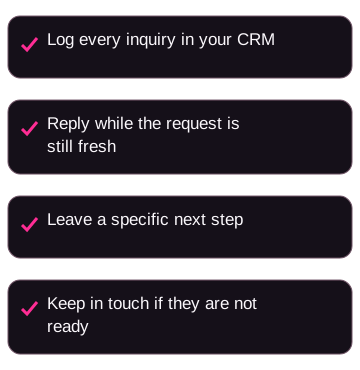
Put every inquiry in your CRM, whatever CRM your firm already uses. If it lives in a spreadsheet only one person understands, it will stall when that person is busy.
Reply while the request is still fresh. Leave a specific voicemail. Send a short note with a clear next step. A usable example, only if it is true for you: "Hi [Name], I saw your note about retirement planning. What time works for a 20-minute call this week?"
Most people are not ready to hire you the week they fill out a form. If you stop after two attempts, you leave the later conversation to whoever stayed in touch. A short monthly note with one useful observation is enough for many people who are not ready. Skip the template that could have come from anywhere.
Keep score the same way for every channel
Cost per lead is an incomplete number. A cheap name that never meets with you is not cheap.
Count, for each channel: inquiries, conversations, meetings that actually happened, new clients, money spent on the channel, and hours your team spent following up.
Then look at cost per attended meeting and cost per new client. Use the same definitions every month. If one channel counts a booked slot and another counts only people who showed up, you are comparing two different businesses.
Here is the math with made-up numbers. These are invented figures, not a result from ads, referrals, or any vendor.
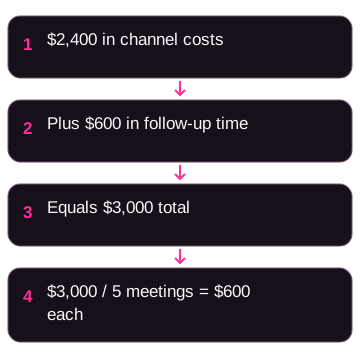
Suppose you spend $2,400 on a channel in a month. Your team spends 10 hours following up at $60 an hour, which is $600. Total cost is $3,000. If 5 meetings actually happen, that is $600 per attended meeting. If one of those meetings becomes a client, you spent $3,000 to acquire that client in this example. If none become clients, you spent $3,000 without a new client.
Do not turn a client's AUM into your revenue, and do not turn revenue into profit. Fees, payout, and the cost of serving the client sit between those numbers. Your operations person should run that math for your firm.
Use the same window for each channel. A referral that becomes a client in week two and a search lead that becomes a client in month five are both real. They are not the same speed.
For broader cost context, see financial advisor marketing costs.
A 90-day sequence you can actually run
This is a suggested order, not a guarantee of lead volume.
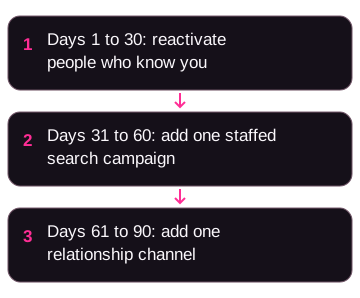
Days 1 to 30: activate what you already have. List clients, former clients, and prospects who know you. Send a genuine note to 20 people with no pitch. Ask three current clients for one introduction each, if that request is allowed. Claim or update your Google Business Profile. Post on LinkedIn about one specific question you help with, with no invented outcome.
Days 31 to 60: add one paid search campaign if you can staff the replies. Start with a budget you can keep long enough to see meetings, not just clicks. Build one landing page with one next step. Put inquiries in your CRM. Put a booking link in the places a prospect already looks: email signature, LinkedIn, the landing page.
Days 61 to 90: add one relationship channel. Meet a few CPAs or estate attorneys who serve the same people. Or plan one specific workshop with a date far enough out to promote it properly. Write the next useful page when you have a real question to answer and enough evidence to answer it well.
At the end of 90 days you should know which of those three phases you actually ran, what became meetings, and what you still cannot staff. That is the point of the window. It is not a promise of a lead count.
Mistakes that waste time and budget
Waiting for referrals to build themselves. Satisfied clients still need a way to describe you and a moment to ask.
Sending paid traffic to your homepage. Give that click one job.
Stopping follow-up after two attempts. People get busy. Build a real cadence, then honor opt-outs.
Marketing to everyone. If you cannot name who you help, you will struggle to write ads, pages, or a seminar title anyone recognizes.
Confusing activity with pipeline. Posts, events, and newsletters are work. Meetings and clients are the score.
Ignoring the website the ads send people to. Fix the page if people arrive and leave. Our financial advisor website design guide covers that conversion job.
A few common questions
How long does it take to get leads as a new advisor?
Paid campaigns can collect inquiries only after they are live and approved. Timing varies. Reactivating people who already know you can produce a conversation this week. Pages and LinkedIn posting can take a long time to matter. Combine a fast relationship effort with paid traffic only if you can follow up. None of those timings is a guarantee.
What is the best source of leads for financial advisors?
There is no best source for every firm. Referrals often arrive with more context. Search ads often arrive with clearer intent. Pages can keep working after you publish them. Your answer depends on timeline, budget, follow-up capacity, and who you want to serve. Many growing firms use more than one channel. We have not run a head-to-head test that says one will produce better clients for you.
How much should I budget?
Do not copy a percentage of revenue from a survey you have not read. Pick an amount you can keep long enough to see attended meetings, include staff time, and still operate the firm. Get written quotes for ads and any lead service. Review the spend against clients acquired, not against how busy the calendar looked.
Can I get leads without spending on ads?
Yes. Referral notes, LinkedIn posts, professional introductions, and a complete Google Business Profile have no media invoice. They cost time. Paid ads are faster to switch on and faster to switch off. Choose with your calendar, not with a slogan.
Do advisors still cold call?
Cold calling is one option. Consider whether your audience expects business calls. You can start with email or LinkedIn and use the phone for people who already asked a question. Whatever you use, have compliance review it. Phone and written outreach are both communications.
What compliance rules apply?
Do not treat this article as a legal summary. Lead generation for advisory firms sits under your regulator, your firm policies, and your compliance reviewer. Ads, testimonials, performance claims, social posts, and emails can all be professional communications. Ask your reviewer to look at the actual draft before it goes out. The SEC and FINRA pages linked above are for that reviewer, not a DIY sign-off. Nothing in this article is a finding that a campaign meets SEC rules.
How do I turn leads into clients?
Reply while the inquiry is fresh. Run a discovery conversation that listens before it pitches. Offer a first meeting with a clear purpose. Stay in touch with people who are not ready. Track which source produced the client. A repeatable process beats an improvised one, but no process guarantees a close rate.
If you want people arriving through your own pages and ads, that is different from buying names. OJay Media is a marketing agency for wealth advisors. We build websites, ads, qualification questions, and follow-up under your firm's name. We have a commercial interest in that work. It is not investment advice, and it is not a promise that any channel will produce clients.
This week, pick one channel you can staff. Write down who follows up. Send anything public through compliance before it goes live. Then use the deeper guide for that channel:
- Referral marketing for wealth managers
- Google Ads for financial advisors
- Facebook Ads for financial advisors
- LinkedIn for financial advisors
- SEO for financial advisors