How do you use email marketing as a financial advisor without sending a newsletter nobody opens? Build a list of people who asked to hear from you, then send a few useful sequences at moments that match what they asked for.
A bought list will not do that work for you. Neither will one monthly dump that tries to cover everything.
Email can keep you in the conversation while someone is still deciding. It cannot replace the meeting, and it will not magically produce clients.
This article is a practical setup: how to grow a list, how to split it, five sequences worth writing, what to run by compliance, how to choose a tool, and how to count booked conversations. It is marketing process, not investment advice. OJay Media is a marketing agency for wealth advisors.
Key takeaways
- Build a list of people who asked for a specific resource. Don't buy names.
- Split the list before you automate, using what you actually know about each person.
- Write five separate sequences: welcome, ongoing notes, re-engagement, before a booked call, and after the call.
- Have your compliance team review templates before they go live. Don't treat this article as a legal summary.
- Track replies and booked calls, not only opens. Compare your own numbers over time.
- Ask email vendors for a current written quote. Don't budget from a remembered price.
What email can actually do for your firm
Paid ads stop when you pause the budget. A social post is easy to miss. Email is different in one practical way: if someone opts in, you can write to them again without buying the click a second time. You still have to earn the open, and they can unsubscribe.
That helps when the decision takes a while. Someone who isn't ready this spring might be ready later in the year. A useful note keeps the door open. A pitch every week slams it shut.
Email is also a poor fit for problems it cannot solve. If nobody on your team replies when a prospect writes back, more mail will not fix that. If your site doesn't explain who you help, a welcome sequence cannot invent that clarity. For the broader pipeline email sits inside, see lead generation for financial advisors.
I have not run a study that proves email beats every other channel for advisory firms. Treat any "highest ROI" figure you see online as marketing until you have checked the method and the date. Count what your own sends produce.
Grow a list of people who asked to hear from you
A shorter list of people who match the clients you want is more useful than a huge list of strangers. Volume is not the first problem to solve.
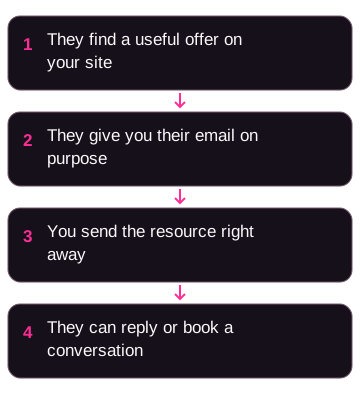
A contact has to ask. Then you send what they asked for. Then they can reply. The diagram shows that process, not a signup rate.
Offers that match the client you want
Give people a reason to opt in that matches the work you actually do. A vague "financial planning guide" attracts whoever is mildly curious. A specific checklist, calculator, or short briefing attracts people with that problem.
| Offer type | Example title | Example audience |
|---|---|---|
| Checklist | 17-point pre-retirement readiness checklist | People approaching retirement |
| Calculator or short assessment | What's your retirement number? | People still saving |
| Short guide | Business sale tax questions to review before you sign | Owners thinking about a sale |
| Webinar registration | Estate planning questions high earners bring to a first meeting | People willing to block time |
| Short video series | Five days on retirement income questions | Late-career professionals |
| Spreadsheet | A simple net worth tracker | People who like to DIY first |
Two rules. The resource has to be real, not a brochure with a new filename. And it should attract the people you want to speak with. If you want to work with households that already have substantial investable assets, don't build the list around beginner investing 101.
You don't need a downloadable file for every article. If you promise a PDF, checklist, or planner, you have to actually deliver it.
A bonus that matches the article they are already reading
Match the offer to the question they are reading about. For example, a retirement-income article could offer a retirement-income checklist. A reader can then see how the resource would help them take the next step.
Webinar signups
Registering for a webinar asks someone to put time on a calendar. Grabbing a PDF does not. After the session, people who didn't book a call can move into your ongoing notes. Promote the event on LinkedIn and to the list you already have.
That still doesn't make webinars the right first move for every firm. If you cannot run a decent session, start with a written resource you can stand behind.
What not to do
Don't buy email lists. Those people did not ask you to write to them. Mail to people who never asked can get ignored or marked as spam, which can damage the domain you send from. Ask your compliance officer before you use any third-party list, including a list a vendor "provides."
Split the list before you automate
The same email to everyone is how you teach people to ignore you. Split the list using facts you already have. You don't need a perfect wealth number on day one.
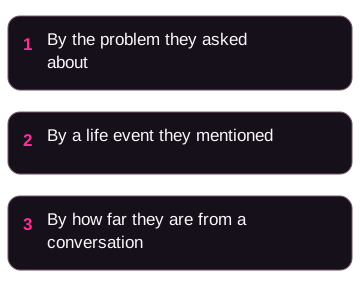
Here are three independent ways to split the same list. You can use more than one. The diagram is a comparison of methods, not a ranking of results.
By the problem they asked about
The magnet they downloaded, the webinar they joined, or a short welcome question is a better clue than guessing. You can group people roughly like this:
- Households still accumulating: tax-efficient saving, workplace plans, first rental property
- Households with more complexity: equity compensation, a concentrated position, a business on the books
- Households thinking about legacy: trusts, charitable giving, family decision-making
Those bands are a writing aid, not a diagnostic of anyone's net worth. Don't imply you know their assets unless they told you.
By a life event they mentioned
People act when something in their life changed. Useful buckets:
- Retirement is roughly within five years
- A liquidity event (sale, inheritance, equity vesting)
- Divorce or death of a spouse
- They run a business
- They are investing on their own for the first time
Write to the situation they named. A generic "markets this month" note is weaker than a note that matches the event they opted in around.
By how far they are from a conversation
- Just opted in, no replies yet
- Opens and clicks your notes
- Visited a services page or clicked a booking link but hasn't booked
- Booked a call (switch to the pre-meeting sequence)
- Already a client (different mail: useful updates, not prospect pitching)
Keep those groups separate so a client doesn't get a "book a first call" email.
Five sequences worth building
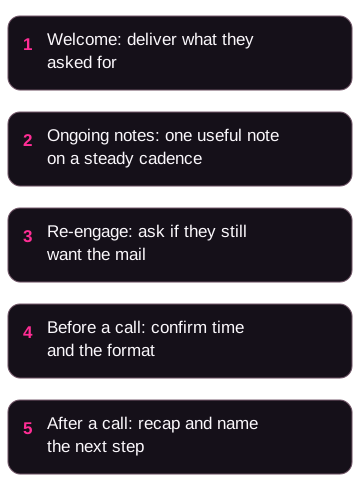
You don't need twenty automations. You need a few sequences with a clear job. Five separate jobs, not one giant newsletter. The diagram is a workflow, not a booking forecast.
1. Welcome (send as soon as they opt in)
New subscribers just asked for something. Send it immediately. Then introduce the firm in plain language, and make it easy to reply.
Email 1, right away
Subject: Your retirement checklist is here, [First Name]
Here's the checklist you requested: [LINK]
I'm [Name]. I run [Firm], and I work with [specific type of client] who want [specific outcome].
Over the next few days I'll share a few things that didn't fit on the checklist.
Hit reply anytime. I read the responses.
[Name]
Email 2, a couple of days later: why you do this work
One specific story. Why this firm exists. Not a resume.
Email 3: name the fear they actually have
"A common worry is feeling behind." Then give one practical way to look at the problem. Don't invent a client. If you don't have a story you can stand behind, skip the anecdote.
Email 4: a worked scenario, if compliance allows it
If you describe a situation, keep it clearly hypothetical or get approval for a client story. "Here's a made-up example of a household at 58 with a concentrated stock position" is cleaner than implying a result you cannot document. Have compliance review any client reference, even with the name removed.
Email 5: a calm invitation
"If anything I've shared matches where you are, I'm glad to talk it through. Here's my calendar: [LINK]"
That is an invitation, not a countdown.
2. Ongoing notes (weekly or every other week)
After welcome, move people onto a steady cadence. Pick a pace you can keep.
One idea per email is easier to read than a six-section newsletter. A useful shape:
- Week 1: one planning concept or tax question, explained plainly
- Week 2: something you're seeing in conversations, without naming clients
- Week 3: a link to an article or tool, with your comment on why it matters
- Week 4: a direct invitation to a call, a webinar, or a review
Send more useful notes than pitches. If every email is a booking ask, people leave.
Subject lines that sound like a person. Use a first-person line only if it is true for you:
- The one tax question I get every March
- Why paying the mortgage off early is not always the first move
- What I'd walk through with someone who just sold a business
- Are you thinking about sequence of returns, or only average returns?
- Something I noticed in reviews this week
Avoid "April newsletter" and "Monthly update." Those labels tell people the mail is a dump, not a note.
If you also do outreach to people who never opted in, that is a different job. See cold email for financial advisors.
3. Re-engagement (when someone has gone quiet)
Inactive names drag down the look of your list and still cost you send volume. A short sequence can ask whether they want to stay.
Email 1
Subject: Did I lose you?
I noticed you haven't opened a few recent emails. That's fine. Inboxes get loud.
I want to know if [original topic] is still useful. If yes, reply "yes" and I'll keep you on. If not, tell me and I'll take you off. No hard feelings.
[Name]
Email 2, a few days later: send one genuinely useful piece, or a new resource that matches what they originally asked for.
Email 3: a clear last note. "I'll remove you in two days unless you click to stay." That is a clean exit, not a threat.
I cannot tell you what share of people will come back. Watch your own numbers, then remove people who stay silent so you're writing to a live list.
4. Before a booked call
When someone books, stop the generic nurture and send a short set that confirms the meeting.
Email 1: time, duration, what you'll cover, and what they don't need to prepare. "This is a 30-minute conversation. No obligation." Saying the format out loud is ordinary courtesy, not a guaranteed no-show fix.
Email 2, the day before
Subject: One thing to think about before tomorrow
We're speaking tomorrow at [TIME].
One question to sit with: what would make the next five years feel like a success for you financially? You don't need a polished answer.
See you tomorrow.
[Name]
5. After the call (within a day)
Don't send a generic "thanks for your time."
Same day: recap what they said, what you heard, and the next step you both named. Quote something specific from the conversation so it's obvious you were listening.
A few days later, if they haven't replied: "I kept thinking about [the specific thing they mentioned], and I wanted to add one thought..."
About a week later, if it's still quiet: restate what's available when they're ready. Leave the door open. Don't pile on guilt.
Count the steps that lead to a conversation
Opens are not meetings. Clicks are not clients.
Keep separate counts:
- People who received the email
- People who replied
- People who booked
- People who actually attended
- People who became clients (tracked later, with the same definitions each month)
A cheap tool can still be expensive if your team spends hours chasing people who never meet.
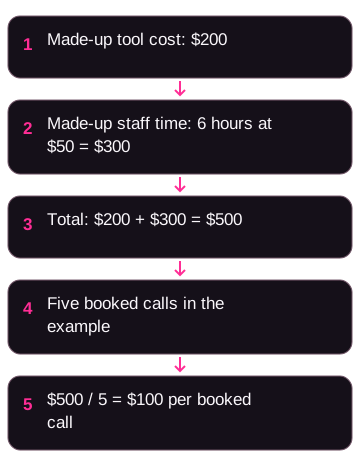
Here's the math with made-up numbers. Suppose the email tool costs $200 that month, and follow-up takes six hours at $50 an hour. That's $200 + $300 = $500. If five booked calls actually happen, $500 / 5 = $100 per booked call.
Those figures are invented. They are not a benchmark, a typical result, or a promise. Your tool price, wage, and show-up count will differ.
Then keep going. How many of those meetings became clients? What did it cost to bring each client in? How long will their fees take to cover that cost, after the expense of serving them? Don't turn assets under management into revenue in your head, and don't treat revenue as profit.
Use the same definitions every month. Otherwise you're comparing two different things.
Get your compliance team to review the mail
This is marketing process, not legal advice, and not a promise that any template is "SEC compliant."
Commercial email in the US has rules. Your compliance officer should tell you what every send must include, including how you identify the firm and how someone opts out. The FTC publishes a CAN-SPAM guide for business. Read it with your reviewer. Don't treat a blog post as the rulebook, and don't assume penalty amounts you saw in an old article are still current.
If you are a registered investment adviser, have your reviewer look at any email that talks about the firm, results, or clients. I am not interpreting those rules here. If you are a broker-dealer or dual registrant, ask the same reviewer which advertising rules apply to you.
Many firms require written approval before a template goes live. Ask what yours requires. Keep the dated approval with the copy. Retain records the way your manual says.
Have compliance review:
- Subject lines and "from" names so they match the actual content
- Any client story, testimonial, rating, or before/after
- Performance, returns, or "typical result" language
- Calendar links, lead magnets, and what you promise to deliver
- Who can hit send, and what gets archived
Don't publish a disclaimer from this article as if it makes the email safe. Your reviewer should supply the language that matches your registration.
For a wider marketing context, see wealth management marketing strategies.
Pick a tool you can actually run
The right tool is the one your team will use, that compliance can review, and that you can afford after you see a current quote.
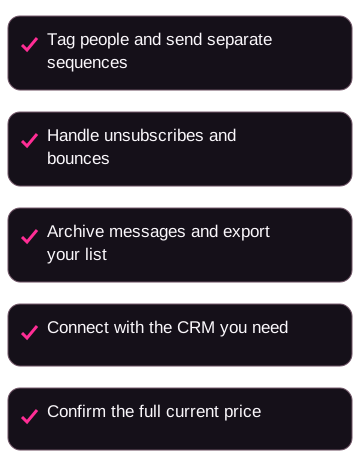
Names you will hear: Mailchimp, ConvertKit (Kit), ActiveCampaign, HubSpot, and sometimes Klaviyo. Ask for a current written proposal and a demo of these five things:
- Tagging and separate sequences for different groups
- How unsubscribes and bounces are handled
- How you archive sent messages and export your list if you leave
- Whether you need a CRM in the same system, or already have one
- The full price, including contacts, seats, and overages
A simple tool is enough when the list is small and the sequences are linear. Move when you need more branching, more seats, or a shared pipeline. On a current demo, ask whether you're looking at a sending tool, a marketing-and-CRM suite, or a platform aimed at consumer brands, and whether that matches advisory work. Don't assume a bigger suite is better.
Some teams keep appointment confirmations on a different sending setup than newsletters, so a marketing blast cannot damage a calendar reminder. Ask your vendor or IT person whether that split is worth it, and which provider they recommend today. Confirm current fit and price before you change anything.
Read independent practitioner reviews before you buy. Still verify anything you might buy on a current demo.
Help the mail reach the inbox
Mail that never arrives cannot start a conversation.
Set up SPF, DKIM, and DMARC on the domain you send from. Your email provider should give you the records. Google's sender guidelines cover authentication and mailing people who opted in. Read them with whoever runs your domain. Without authentication, receiving inboxes have less reason to trust you. I cannot honestly tell you a percentage that will land in spam.
If the sending domain is new, start with a small number of people who recently opted in or recently replied. Increase volume gradually. A sudden blast from a cold domain is a common way to look like a stranger.
Remove hard bounces. After repeated soft bounces, stop sending. Run the re-engagement sequence, then take silent names off the marketing list.
Write like a person. Heavy sales language ("act now," "guaranteed," "you've been selected") is a poor fit for this audience anyway, and it can also hurt filtering. I am not giving you a forbidden-word list that makes mail "safe."
Ask your provider what they recommend today to inspect SPF, DKIM, and DMARC.
Subject lines that sound like a person wrote them
On a phone, you get a short stretch of text before the rest is cut off. Write the subject as a sentence you'd actually send. Use a first-person line only if it is true for you.
Examples you can adapt:
- 3 things to review before a 401k rollover
- When I tell someone to pause a Roth contribution (and when I don't)
- What I'd ask a 55-year-old owner this week
- I know you've heard this, but here's the part that matters
Skip all-caps, skip the firm name as a prefix, and skip stuffing the primary keyword into the subject. If you test two subjects, don't declare a winner off a handful of opens. Ask your tool how they run a fair test.
Keep clients in the loop, and ask for referrals when it fits
Your list is not only prospects. Clients who hear from you regularly are easier to remind, in a natural way, that you work with people like their friends.
A line that fits inside a useful note: "If you have a colleague navigating [the same situation], I'm glad to have a conversation. No obligation." That is not a formal referral program, and I cannot tell you it outperforms one. For structure around referrals, see referral marketing for wealth managers.
A few common questions
How often should a financial advisor email their list?
Pick a cadence you can keep. Every other week is fine if weekly would slip. Missing several weeks and then sending a burst teaches people to ignore you. If monthly is the honest maximum, do monthly well.
What is a good open rate?
Watch your own open-rate trend, then check whether readers reply and attend meetings. A sudden drop can mean deliverability trouble or a subject line that doesn't match the list. Compare welcome mail against ongoing notes separately. They should not look the same.
Do advertising rules apply to a newsletter?
Treat that as a question for your compliance officer, not a blog post. If the email promotes the firm, mentions results, or includes client comments, assume it needs review. Start with the FTC page linked above, and with your own manual.
What email platform should I start with?
Start with a tool you can set up this month, with tagging, an unsubscribe path, and an export. You'll hear names like Mailchimp. Upgrade when you can describe the extra automation you need, not because a comparison table said you "should." Get current pricing in writing.
Should email replace calling people?
No. Email warms a conversation and follows it up. The meeting is still the meeting. If you want a wider view of bringing people in, see how to get clients as a wealth manager.
What to do this week
You don't need a perfect stack.
- Choose one resource that matches the client you want, and put an opt-in on the page that already discusses that topic.
- Write the first two welcome emails and send the resource immediately on signup.
- Put those templates in front of compliance before anything goes live.
- Set a weekly or every-other-week reminder to write one useful note.
- Turn on a short pre-meeting and post-meeting pair in whatever calendar tool you already use.
- Once a month, count replies, booked calls, attended meetings, unsubscribes, and bounces.
If you also want people finding your firm on their own, that is a separate project: pages, ads, questions before a booking, and follow-up under your name. That's the work we do at OJay Media, so we have a commercial interest in that broader setup. It is not the same product as "buy an email platform and press send."
Related reading: lead generation for financial advisors, cold email for financial advisors, wealth management marketing strategies, and referral marketing for wealth managers.