Referral marketing for wealth managers works when you make it easy to introduce you. That means a sentence people can repeat, a moment that actually fits the ask, and a specific request instead of 'if you know anyone.'
Hoping for introductions is not a plan. Some clients will send people on their own. Many will not, because they do not know who you want to meet, when it would help to mention you, or what to say next.
This article walks through that process. You get a referral sentence, moments that make an ask feel natural, sample wording, a way to work with a few professional partners, and a made-up tracking example. If money, gifts, testimonials, or published endorsements are part of the program, have your compliance reviewer check it before you formalize anything.
Key takeaways
- Give people one sentence they can say about who you help and when.
- Ask after something useful just happened, not as a leftover once a year.
- Make the request specific and easy, such as a short text they can send.
- A few professional partnerships with a clear 'who to send' beat a stack of unused contacts.
- Count asks, introductions, meetings that happen, and new clients separately.
- Get your firm's compliance approval before you pay for introductions or publish testimonials.
Why informal referrals stall
The usual problem is not that clients refuse to help. It is that referring you takes more work than it should.
Three patterns show up over and over.
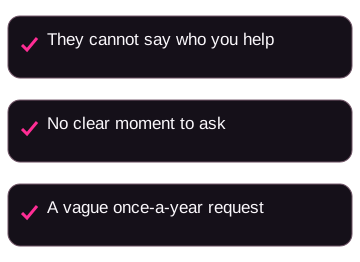
They cannot describe you. 'He's a financial advisor' gives a friend nothing to work with. 'She works with surgeons who are selling a practice' gives them a picture. If a client cannot say who you help, they cannot spot the right person.
There is no obvious moment. Introductions rarely come from someone thinking about you at random. They come after a result, a hard stretch you handled well, or a review that made progress visible. If you never mark those moments, they pass.
The ask is vague and easy to forget. 'If you know anyone...' once a year is easy to nod at and never act on. It does not say who, it does not say what to do, and it does not give them a sentence to forward.
Fix the description, the moment, and the request. Do not wait for people to invent those for you.
Write a sentence people can actually repeat
The piece that makes everything else easier is a sentence a client can say without translating your bio.
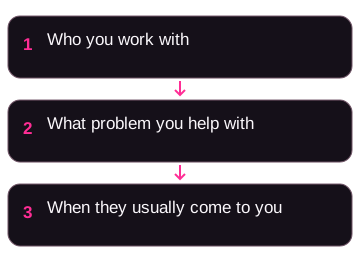
Write the sentence you want them to use. It should answer three questions:
- Who do you work with? Name a real profile, not 'families' or 'everyone.'
- What problem do you help with? Name the situation, not your job title.
- When do they usually come to you? Name the trigger, such as a sale, a retirement window, or an inheritance.
Here is an example of a sentence, not a client story: 'She works with physicians in their last five years before retirement who are trying to sell a practice, pay down debt, and fund a retirement they have not had time to plan.'
'Fee-only financial planner' is a credential. It is not something a friend can match to a person they know.
Once you have the sentence, use it in the same form on your website, in your LinkedIn headline, in onboarding notes, and when a client asks what you do. People copy the phrasing they hear from you.
If you need a broader pass on who you are for, read how to attract high-net-worth clients. That page is about positioning. This one is about turning that positioning into introductions.
Ask after something useful just happened
Timing changes how the same request feels. In the middle of a messy onboarding, an ask can feel like a bill. Right after you helped with something concrete, it can feel like a natural next sentence.
These are moments to consider, not a ranked study of what converts.
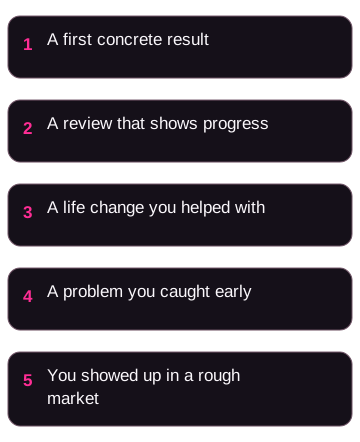
A first concrete result. The first time they can point to something useful you did, such as catching a tax issue, fixing a beneficiary error, or spotting a refinance they had missed, the work is still fresh. You can name what happened, then ask if they know someone in a similar spot.
A review that shows progress. Not every annual review is a good moment. When the review makes progress visible, such as a completed estate update or a goal they can see, close with a specific ask while that proof is on the table.
A life change you helped with. Marriage, divorce, an inheritance, a business sale, a new child, or aging parents all add complexity. Someone who just got through that with you may know others in the same situation. That still does not mean they owe you a name.
A problem you caught early. When you find something they would not have asked about and you handle it, you have a concrete reason to say situations like this are more common than people think.
You showed up in a rough market. After a volatile stretch, a short summary of what you did together can be a better setup than a cold ask in a quiet month. Stay factual. Do not invent a hero story.
Put a reminder in your CRM when one of these happens, so the next conversation is not 'we should remember to ask sometime.' For inbound work that can sit next to this, see lead generation for financial advisors.
What to say when you ask
Vague asks get vague follow-through. A usable ask names who you want to meet, gives the client a small next step, and lets them decline.
These scripts are starting points. Change the wording so it sounds like you. Do not claim a growth story in the script unless it is true for your practice.
After a real result, in the room or on the phone
I'm glad we caught that. The people I help most are in situations like yours, [specific profile]. If anyone comes to mind among your peers at [company, club, or professional circle], I'd welcome an introduction. A short text from you saying they should talk with me is enough. Would that feel comfortable?
What to keep: a specific profile, a low-friction action, and an honest chance to say no.
At the end of a review
Before we wrap up, we made real progress this year on [specific item]. If you know one or two people who would benefit from this kind of work, I'd be grateful for an introduction. Who comes to mind?
Then wait. Do not rush to fill the silence with a second speech.
Only add a line about your practice growing through client introductions if that is actually true.
A short follow-up note
Send this a day or two after a meaningful meeting, not as a blast to your whole book.
Subject: Quick follow-up from today
[Client Name],
I've been thinking about the [specific situation] we walked through today. Helping with that kind of decision is the work I want more of.
If you have one or two peers facing something similar, a short email from you is enough. I can take it from there. You can also forward this note or our site: [link].
Thank you for the trust.
[Name]
The structure stays the same even when the sentences change: name the moment, name the person you want to meet, make the action small.
For how this sits inside a wider marketing plan, see wealth management marketing strategies.
Build a few professional partnerships
Centers of influence are professionals who already meet the people you want to help. Common examples are CPAs, estate planning attorneys, insurance professionals, business brokers, and commercial lenders.
They are not a guaranteed source of clients. A lunch and a card swap is not a partnership. Most of those fade into a rare LinkedIn like.
A working relationship is specific, two-sided, and kept alive on purpose.
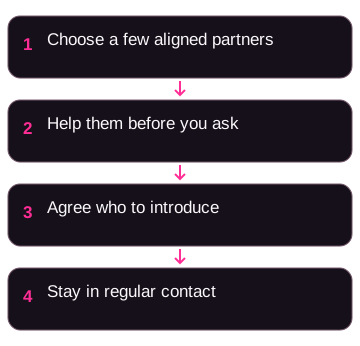
Choose a few aligned partners. Look for an overlapping client type, work that does not copy yours, and someone who will actually pick up the phone. Three to five real relationships are easier to maintain than twenty names you never contact. That is a workload choice, not a researched ratio.
Help them before you ask. Send something useful for their clients. Introduce one of your clients when there is a genuine fit. Offer to speak to their group only if you have something concrete to teach. Reciprocity is easier when you have already been useful.
Agree who to introduce. Ambiguous 'let's cross-refer' produces random names or none. If you want business owners within about two years of a sale, and expected proceeds around $2 million or more, say that. Ask who they want in return. The dollar figure here is an example of being specific, not a minimum that works for every firm.
Stay in regular contact. Put a reminder to check in. Share a useful note. Ask what they are seeing. A relationship that only appears when you need a name is easy to ignore.
Insurance professionals often sit next to policy reviews, liquidity, and estate triggers. Business brokers sit next to a sale. Those are moments when someone may need a wealth manager. Whether a given person will introduce you still depends on trust and fit, not the job title.
A note you can send
Subject: Exploring a referral relationship, [Your Name]
Hi [Name],
I've followed your work with [their firm, a mutual connection, or a piece they wrote], and I think we may be able to support the same households without duplicating what the other does.
My practice focuses on [your niche, for example business owners in pre-sale planning]. I often meet people who need [the specific help they provide] and do not have someone they trust to call. I'd like to be able to send those introductions to you.
I'm looking for a fit, not a one-way lead swap. Would you be open to a 20-minute call to see whether our work overlaps in a useful way?
[Your Name] [Title] | [Firm] | [Phone]
Lead with what you can send them. Ask for a conversation, not an immediate name.
For the rest of your client-getting picture, see how to get clients as a wealth manager. For outreach on LinkedIn specifically, see LinkedIn for financial advisors.
Have your compliance reviewer look at the program
This is marketing process, not legal advice. Do not treat this page as a finding that a referral program is allowed, banned, or compliant.
If you pay for introductions, offer gifts, use testimonials, or put client quotes and reviews on your site or in ads, have your compliance reviewer check the current SEC Marketing Rule and any FINRA or state rules that apply to how you are registered. Written terms and client-facing disclosures are the kinds of materials they will usually want to see when compensation or public endorsements are involved. Your reviewer should tell you what your firm needs.
A verbal ask in a review, with no payment and no public quote, is still worth a quick check against your own policies. Do not assume a blog post has cleared it.
Start with the SEC Marketing Rule page and, if you have broker-dealer registered people on the team, FINRA's advertising regulation overview. Then follow your reviewer's instructions.
Track asks, introductions, meetings, and clients
If you do not count the steps, you cannot tell whether the problem is that you are not asking, that nobody is introducing, or that introductions are not becoming meetings.
Keep four columns, in a CRM or a spreadsheet:
- Asks you actually made
- Introductions you received
- Meetings that happened
- New clients from those meetings
Do not mix those numbers. An introduction is not a meeting. A meeting is not a client.
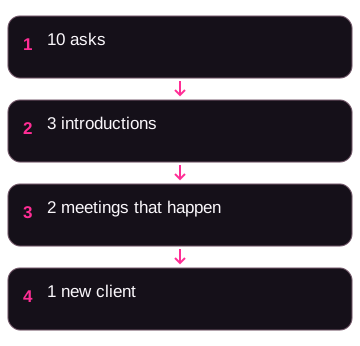
Here is a made-up example. Suppose in one month you make 10 structured asks. Three people introduce someone. Two of those people attend a meeting. One becomes a client.
In this example, 3 of 10 asks produced an introduction, which is 30 percent. 2 of 3 introductions became meetings. 1 of 2 meetings became a client.
If nobody became a client, you would still have spent the time on 10 asks and 2 meetings. The counts show you where things stalled. These figures are invented. They are not a target, a typical result, or a forecast.
Look at which clients and partners actually made introductions, and give those relationships extra care. You do not need a slogan about top referrers to do that. Do not convert AUM into revenue in this spreadsheet unless you are using a fee figure you already know is correct for that client.
Review the four columns monthly so a quiet stretch is visible while you can still change the ask, the timing, or the follow-up.
A four-week way to start
You do not need a six-month project to begin. This is a starting sequence, not a promise of introductions by day 30.
Week 1. Finish the referral sentence. List 10 to 15 clients who know your work well. Note the last useful moment for each, even if it was months ago.
Week 2. Put a referral conversation on the calendar where a review or check-in is already happening. Use the post-result script or the review close. Log every ask.
Week 3. Pick three professional partners. Send the note above. Your aim this week is a conversation on the calendar, not a signed client.
Week 4. Set up the four columns. Record asks, introductions, meetings that happened, and new clients. Look at the month and decide what to change.
Then keep going. The point is a repeatable habit, not a one-month sprint. For the wider context, return to wealth management marketing strategies.
Referrals are one way people reach you. Another is that they find your firm, learn how you work, and ask for a conversation under your name. That takes pages, follow-up, and time. It is a different job from asking a client for an introduction. OJay Media builds that kind of marketing, so we have a commercial interest in it. It is not a replacement for the referral habits in this article.
This week, write the sentence, pick the first 10 clients, and make one specific ask after a real moment. Send one partnership note. Open the four-column tracker. If payment or public testimonials are in the plan, talk to compliance before you roll them out.
A few common questions
Does asking for referrals hurt the relationship?
It can, if the ask is early, pushy, or sounds like an invoice. I can't honestly tell you a warm ask always feels good to every client. A specific request after you helped with something, with room to say not right now, is a different conversation from a quarterly guilt trip. If they hesitate, thank them and move on.
Can I pay clients or partners for introductions?
That is for your compliance reviewer to answer for your firm. Compensation, gifts, and public testimonials are the issues to put in front of them, along with current SEC Marketing Rule guidance and any other rules that apply to your registrations. Do not start a paid program based on this article.
What is the difference between a center of influence and a formal alliance?
A center of influence is someone who already meets the people you want to help, such as a CPA or estate attorney. A formal alliance is when you agree on mutual introductions, shared events, or written terms. Put the formal and paid versions in front of compliance before you launch them.
How do I know if this is working?
Read the four columns. No asks means the process never started. Asks without introductions means the sentence, the moment, or the request needs work. Introductions without meetings means follow-up is the gap. Give it enough time to see a meeting through, and do not judge the whole approach on one unanswered text.