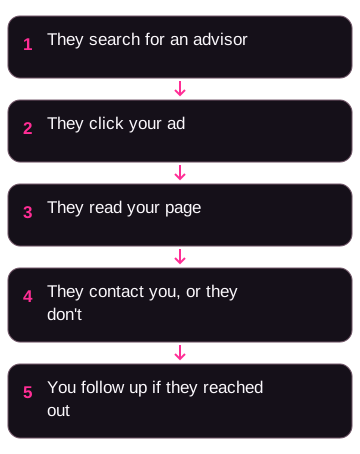
Google Search ads can show your firm when someone searches for an advisor. To make a useful test, connect four things: the search you pay for, the ad they see, the page they visit, and the person who follows up.
Start with a small set of searches your firm can answer well. Set a budget, build the matching page, and decide how you will count attended meetings and clients. A click tells you someone visited. It does not tell you they will hire you.
Key takeaways
- A Google search reaches people who asked for an advisor. A Facebook ad often reaches people who did not. Those are different jobs.
- Pay for searches that match the people you want to talk to. Exclude jobs, salaries, software, and "how do I become an advisor."
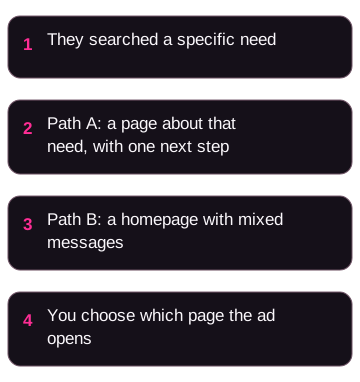
- Keep campaigns in tight themes. Send each theme to a page that answers that search, not to a general homepage.
- Count clicks, conversations, meetings that actually happen, and new clients separately.
- Get your compliance reviewer to check the ad and the page before anything goes live. I cannot tell you an ad is allowed.
- If nobody has time to follow up, fix that first. Buying clicks does not create hours in the day.
Why a Google search is a different kind of click
A search such as "financial advisor near me" or "fee-only advisor Denver" names the help someone is looking for. They may still be researching before a conversation. You are not interrupting a photo feed. You are answering a request they typed.
That is the whole case for search ads. It is also the limit. There are only so many of those searches in your market. You cannot invent more of them by raising the budget.
A Facebook or Instagram ad can still be useful. It usually has to create interest first: an event, an article, a retargeting audience. For that job, see Facebook Ads for financial advisors. Search does a later job. The search gives you a specific question to answer.
Compare the job each channel does before comparing costs: the person arriving from search told Google what they want. The person arriving from a feed did not. Your page, your first conversation, and your follow-up still have to do the work.
Other firms can bid on the same search. You are not buying an exclusive introduction. The person may also see organic results and other ads, so the first conversation should assume they are comparing.
Search interest can move around. Tax season, market swings, retirements, job changes, and inheritances can change how often people look. Keep useful campaigns running if you use this channel. Do not assume a busy week will repeat, and do not build a hiring plan on a spike you have not seen in your own account.
What people actually type when they want an advisor
Not every search is worth the same follow-up time. Start by grouping the language real people use, then decide which groups belong in your account.
City and "near me" searches. Phrases like "financial advisor near me" or "fee-only advisor" plus your city. These people are usually comparing local firms. If you only serve a tight area, this is often the first theme to test. If you work nationally, city terms may waste money unless you truly want those calls.
Life-event searches. Phrases like "401k rollover advisor," "financial advisor retirement," or "inheritance financial advisor." The person named a situation, not just a job title. That can make the first call clearer, because you know what showed up. It does not mean they are ready to sign, and it does not mean every rollover search is a fit for your minimums.
Niche searches. Phrases like "advisor for business owners," "financial advisor for doctors," or "wealth manager for tech employees." Check the available search volume before setting a budget. If you actually serve that group, the ad and the page can say so. If you do not, do not bid on it just because it sounds premium.
Research searches. Phrases like "how to find a fee-only financial advisor," "fiduciary advisor vs broker," or "should I hire a financial advisor." These people are still deciding whether to hire anyone. A clear page can help. A hard "book now" page may feel early. This is also where organic articles can do part of the job. See SEO for financial advisors.
Your firm name. If someone types your name, you usually want your site to show, not only a competitor's ad. Ask your ads manager to protect those searches. It is a small, separate campaign, not the whole strategy.
Then build the exclusion list before you spend. Exclude searches for jobs, pay, software, and free apps, then read the actual search terms Google shows you after launch. Add negatives such as:
- jobs
- salary
- "how much does a financial advisor make"
- "become a financial advisor"
- "financial advisor software"
- "free financial advisor"
- "online financial advisor app"
Read the actual search terms Google shows you after launch, and keep adding exclusions. One generic campaign with no negatives will pay for plenty of clicks you will never want to return.
Write the ad like a reply to that search. If they typed a city, name the city. If they typed a situation, name the situation. Say who you help and what the next step is. Leave returns, guarantees, and "risk-free" language out of the ad unless your reviewer has approved a version they can stand behind.
How to group campaigns so the ad matches the search
A common weak setup is every keyword in one pile, one generic ad, and the homepage as the destination. Google then has to guess. The searcher sees an ad that could be about anyone.
A cleaner starting layout is separate campaigns, or at least separate ad groups, by the job of the search:
- Brand: your firm name and close variants
- Local intent: "near me" and city plus advisor or wealth manager
- Life events: rollover, retirement, inheritance, and similar
- Niche: only the audiences you actually serve
- Competitor names: optional, and only if you are willing to explain on the page why someone searching another firm should talk to you instead
Each group should have a tight theme, ads that use that same language, and a matching page. You do not need a magic keyword count. You need the ad to sound like a reply to that search.
Google's keyword match types control how closely a search must relate to your keyword. A practical way to start:
- Keep the highest-intent phrases tighter so you are not paying for every related idea Google can invent.
- Use more flexible matching only after you have a search-terms report and a negative list you trust.
- Do not start with the loosest matching on day one.
Ask your ads manager to show you the search terms at least weekly at the start. If the query is a job, a student question, or a software comparison, add it as a negative.
Also ask how location targeting is set. A city name in the keyword is not the same as showing only to people in that city. If you serve a drive-time radius, have them show you the map, not just the campaign name.
Ask your ads manager whether any local or automated Google products apply to your market, where those ads can show, and whether you pay per click or per lead. Get eligibility, billing, and review times in writing. Do not budget from a blog post, including this one.
If a product charges per lead, ask what counts as a lead, what happens when the details are wrong, and whether you pay when the person never answers. If it charges per click, ask what a wasted click looks like in this category. Those are different purchases.
Automated campaigns that mix search with other placements are a later test. If you do not yet know which searches and pages lead to real conversations, giving the system more places to spend will not fix that. Do not hand the whole budget to automated bidding on day one. Ask your ads manager how they will start, and what evidence they want before they loosen control.
What to send them to after they click
This is where a lot of Google Ads accounts waste money. The click is not the outcome. The page either makes the next step obvious or it sends the person wandering.
Search traffic is not the same as cold social traffic. A Facebook prospect may need a longer story before they will give you a name. A search prospect already asked for an advisor. They need to see that you are relevant, that you serve people like them, and how to start a conversation. For the broader website problem, see financial advisor website design that converts.
On the first screen, keep it simple:
- A headline that matches the search ("Fee-only financial advisor in [city]," if that is what they typed and that is what you are)
- One or two sentences on who you help
- One clear next step: a click-to-call number, or a short way to book a conversation
- One concrete trust detail your compliance reviewer has already approved (credentials, years in practice, or who you work with). Do not invent a performance story to fill this slot.
Further down the page:
- A short bio with a real photo of the people they would meet
- Two or three services that match that keyword theme
- A second chance to call or book, still one action, not a maze
Leave these off a search landing page unless your reviewer has a reason to keep them:
- A full site navigation that invites people to wander away
- A generic headline such as "We help you reach your financial goals"
- A long article that buries the next step
- A form that asks for a life history before anyone will talk to you
Do not copy a webinar opt-in funnel onto a search ad by default. That funnel is built to collect names from people who were not looking for you. A search page is built to start a qualified conversation. If you want a guide or a checklist, put it on a research-term page, and do not promise an emailed resource you do not actually send.
Track the actions that matter: a call that becomes a conversation, a form, a booked meeting. Ask your ads manager to set that tracking in the account. Do not optimize for clicks alone, and do not treat every form fill as a meeting.
How to judge what a click is actually costing you
Ignore vague "typical CPC" charts. What you pay depends on your city, the searches, the ads, the pages, and who else is bidding this month. Ask for a current forecast, then treat it as a forecast.
Google's Quality Score helps diagnose the ad and landing-page experience. The displayed score itself is not an input in the auction. Use it to investigate problems, and judge the campaign by actual costs and conversations.
A cheap click can still be expensive. Your team spends time on the ones who do not answer. So count:
- What you paid Google (and any agency fee)
- Staff time to call, email, and follow up
- Conversations that actually happened
- Meetings that people attended
- Clients you signed, later, with the same definitions each month
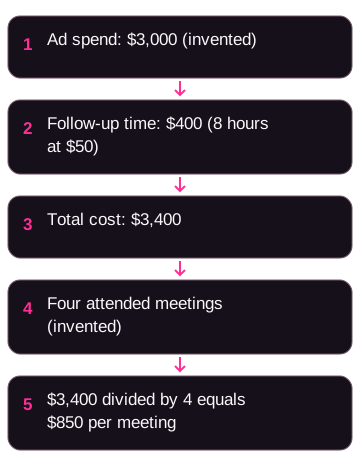
Then divide the money and time by the meetings that happened. That is your cost per meeting for that period. It is not ROI. It is not profit. It does not turn someone's assets into your revenue.
Here is the math with made-up numbers. Suppose you spend $3,000 on ads in a month and your team spends eight hours following up at $50 an hour. Follow-up time is $400. Total cost is $3,400. If four meetings actually happen, $3,400 divided by 4 is $850 per meeting.
If those four meetings produce one client, your cost to acquire that client in this example is $3,400, before the cost of serving them. If they produce zero clients, you spent $3,400 and have no new client yet. Neither figure is a Google benchmark. Your numbers will differ.
Use the same definitions if you also run Facebook ads or buy leads. A "lead" that is only a form fill is not the same as a meeting. For a wider cost picture across channels, see financial advisor marketing cost.
Do not convert a prospect's assets into your fee and call it proof that ads work. Fees, payout, and profit depend on your firm. Ads cannot promise that math.
Google Ads versus Facebook Ads
This is not a contest with one winner. The two channels do different work.
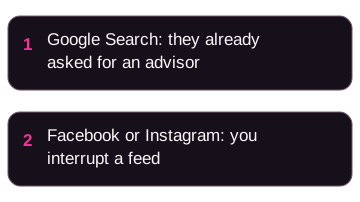
Google Search ads. The person typed a request. Volume is capped by how many people search. You mainly need accurate copy, a matching page, and tracking. Results still take follow-up. A quiet market stays quiet even if you bid more.
Facebook or Instagram ads. You choose who sees the ad, within the platform's rules. You can reach more people than local search volume allows. You usually need images or video, and you should expect more educating before a first meeting. This is often the better fit for filling an event or building an audience to message later.
Compare them on the job, the creative you can actually produce, the follow-up you can staff, and a written budget. Do not compare a Google price per click to a Facebook price per click and stop there. Include time. Include no-shows. Include the wait between a first call and a signed client.
Ask each provider or ads manager to walk through one person from first impression to follow-up. Then ask what you own if you pause spend: the audience, the page, the inquiry list, and the tracking.
Look more closely at Google Search first if people already search for the help you sell, you can answer those searches on a specific page, and someone can pick up the phone.
Look more closely at Facebook or Instagram first if you need to introduce the firm, fill a room or a webinar, or reach people who are not searching yet.
If nobody has time to follow up, fix that first on either channel.
You can use both: social to become familiar, search to catch people who are ready to look you up. That is a sequencing choice, not a guarantee. For the wider system, see lead generation for financial advisors.
What to get reviewed before an ad goes live
Check Google's financial-products advertising policy, including any verification required for the places you advertise. Then have your firm's reviewer check the ads and landing pages. Platform approval does not replace that review.
Before launch, send your reviewer:
- Every headline and description
- The landing page, including the headline, bio, and any client story
- What happens after someone submits a form or calls
- Any badge, rating, testimonial, or result you want to mention
- Who you are targeting, including city and any income or asset language
Write the ad about who you help and how you work. Leave guaranteed returns, "risk-free" claims, and specific performance out of the ad unless your reviewer has approved a version with the disclosures they require. A short Google ad is a bad place to stuff those disclosures anyway.
Google can also disapprove ads for its own reasons, even when your reviewer is comfortable. Plan for that delay. Fix the copy. Do not keep tweaking live ads every day during a review.
State-registered and SEC-registered firms can have different internal processes. Broker-dealer reps may have extra pre-clearance. Ask your own people. Do not treat this article as a pass.
Check the campaign before you turn it on
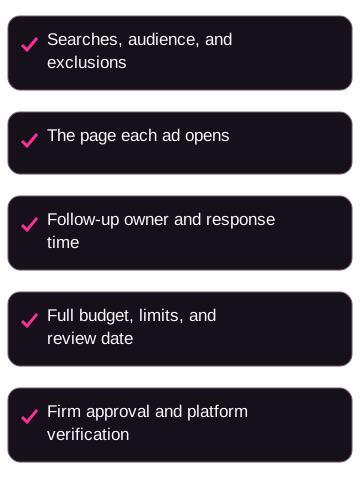
Work through these five checks with the person running the ads.
Searches and audience. Name the people your firm can serve and the places you serve them. List the searches you will pay for and the job, salary, software, or other searches you will exclude.
The destination. Give each search theme a page that answers it. Open every ad's destination and try the booking or contact step yourself.
Follow-up. Name who contacts a new inquiry, how soon, and who keeps in touch when someone is not ready. Make sure those people have the hours.
The full budget. Include ads, agency fees, and staff time. Set a spending limit and a review date. Read the minimum term, pause rules, and cancellation terms.
Approval. Have your reviewer check the ads and pages before launch and when the copy changes. Confirm any platform verification before scheduling the campaign.
Keep these answers with the campaign plan so the next review uses the same definitions.
A simple way to start
You do not need a huge account on day one. You need a test you can read.
First: Protect your firm name. Set conversion tracking for calls, forms, and booked meetings, with help from whoever owns your site. Name the person who will contact a new inquiry the same day, and the person who follows up later. Pick a monthly budget you can afford to lose while you learn, and a date you will review the account with the same definitions.
Then: Run one local theme (your city plus the service you most want). Add the negative list above. Send traffic to a matching page. Read the search terms. Pause what is irrelevant.
After you can see a few real conversations: Add a life-event theme or a niche theme if those searches exist in your market and your page can answer them. Test one landing-page headline change at a time. Ask whether a Google local ads product is available to you, what a "lead" means in that product, and what you pay when the contact is wrong.
When you review: Do not judge the channel on a handful of unanswered calls. Also do not keep funding a campaign that only produces job-seekers and homepage bounces. Look at cost per attended meeting, then at clients, with enough calendar time for a first conversation to turn into a decision.
OJay Media is a marketing agency for wealth advisors. We build website pages, ads, qualification questions, and follow-up under the firm's name. We have a commercial interest in that work. It is not the same product as turning on Google Ads, and it does not guarantee clients. Judge a Google Ads test on your own numbers either way.
A few common questions
How much should a financial advisor spend on Google Ads?
Choose your test budget around your market, follow-up capacity, and what you can afford to spend. Spend an amount you can afford for a full test cycle, including staff time, without needing the first week to pay for itself. A budget too small to get a read, or too large for your team to follow up, will both waste money. Ask for a written plan that states the searches, the pages, the tracking, and the review date. Do not copy a round number from an old article.
Do Google Ads work if you only want larger clients?
They can, if the searches, the ad, and the page all describe the people you actually take on. A query can name a situation or a city. It does not reliably name someone's investable assets. You still need questions before a meeting, and you still need someone to decline a bad fit. Nothing in Google Ads guarantees a high-asset client.
How long should I run a test?
Agree on a budget and a review date before you launch. Leave time for the account to collect real search terms, for your negative list to grow, and for a first conversation to become a meeting. A few quiet days are not a verdict. A contract or budget you cannot pause is a separate risk: read that before you start.
What should I ask an ads manager or agency before I start?
Ask them to walk through one click from search term to page to follow-up. Then ask:
- Which searches are in, and which are excluded?
- Where does each ad send people?
- How are calls, forms, and meetings tracked?
- Who is watching the search-terms report?
- What does the first month look like if results are slow?
- What needs compliance approval, and who submits it?
If they cannot show you the path, you are buying activity, not a system.
Can financial advisors run Google Ads without a compliance review?
You should not. Platform approval is not the same as your firm's approval. Have your compliance reviewer sign off on ads and pages before they go live, and again when copy changes. I cannot tell you that a phrase is allowed.
More on this for financial advisors
- Facebook Ads for financial advisors
- SEO for financial advisors
- Financial advisor website design that converts
- Financial advisor marketing cost
- Lead generation for financial advisors
If you want help building the pages, ads, and follow-up around your firm, start with those pieces, then decide whether a conversation with OJay makes sense.