You cannot pick among Planswell, Apex Acquisition, and Advisor Jetpack from a headline fee.
These three companies may not be selling the same thing.
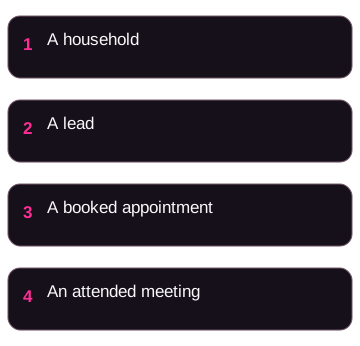
Define what you will count as delivery. A household, a lead, a booked appointment, and a meeting that happens are different units. Line up those definitions in the written quotes.
Until you line up the same costs, the same delivery unit, and the same follow-up work, you are not comparing the same purchase.
Ask each vendor for a current written proposal. Then compare those documents, not the marketing pages.
Key takeaways
- Confirm what you are buying before you compare prices. A household, a lead, a booked appointment, and a meeting that happened are different units.
- Get the current fee, currency, setup charge, advertising budget, term, refund rule, and delivery definition in writing from all three.
- If a public page shows packages, confirm which page, currency, and package apply to your firm. Don't budget from the lowest number you find online.
- Add staff time and compliance review time to the vendor fee. Then divide by meetings that actually happened.
- Review scores and case studies are not a forecast of your result.
- Have your firm's compliance reviewer check ratings, testimonials, or performance language before you reuse any of it.
These three quotes may not be for the same thing
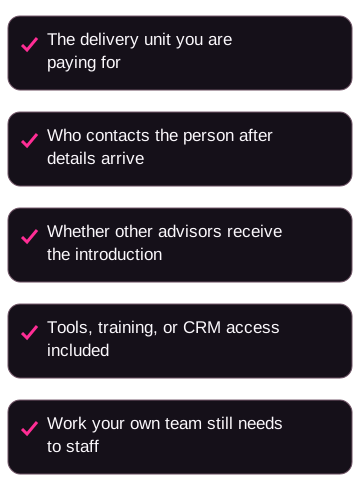
Write down what each proposal includes. Check coaching, CRM access, and follow-up tools separately so you can see which costs sit outside the quoted fee.
Have each vendor show you how an introduction reaches your team. Name who makes the first contact and who handles the next attempt if there is no reply.
The practical questions:
- What unit are you paying for: households, leads, booked appointments, or attended appointments?
- Who contacts the person after the details arrive?
- Do other advisors receive the same introduction?
- What tools, training, or CRM access are included in the quote?
- What do you still have to staff yourselves?
That last question matters as much as the fee. If your team has to handle texts, emails, no-show recovery, and CRM updates, that labor is part of the purchase even when the vendor does not itemize it.
For another comparison, see Advisor Jetpack vs SmartAsset. For the two-way Apex and Advisor Jetpack write-up, see Apex Acquisition vs Advisor Jetpack. You can also read Apex Acquisition vs SmartAsset. This page stays on the three-way cost and contract decision.
OJay Media sells marketing work to advisor firms, so we have a commercial interest in how you buy growth help. This comparison should still be useful on its own. It is not a finding that OJay is interchangeable with these three vendors.
Ask for the full price in writing
You need the full cost and commitment before you can make a useful comparison.
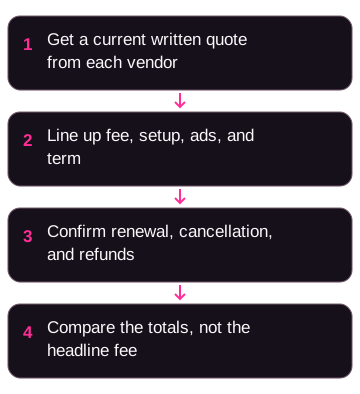
Ask all three for:
- the current fee and the currency you will be billed in
- any setup fee
- any advertising budget billed separately
- the minimum term, renewal, and cancellation notice
- the refund rule, and which document controls if the sales page and the contract disagree
Some vendors publish package displays. Those displays can differ by page, currency, and audience. Confirm which package names apply to your firm before you treat any display as your price.
For all three companies, confirm that any advertised package, price, and included services appear in your written agreement. Don't sign from a marketing page alone.
Here's a simple worksheet. Fill every cell from a current written proposal. If a cell is blank, mark it "request in writing." Don't invent an average to fill the gap.
| What to confirm | Planswell | Apex Acquisition | Advisor Jetpack |
|---|---|---|---|
| Current fee and currency | Request in writing | Request in writing | Request in writing |
| Setup fee | Request in writing | Request in writing | Request in writing |
| Advertising budget, if billed separately | Request in writing | Request in writing | Request in writing |
| Minimum term, renewal, and cancellation notice | Request in writing | Request in writing | Request in writing |
| Refund rule and which document controls | Request in writing | Request in writing | Request in writing |
| Delivery unit and disqualification rules | Request in writing | Request in writing | Request in writing |
| Data ownership, export, and access after you cancel | Request in writing | Request in writing | Request in writing |
| Who handles follow-up on your side | Name the person | Name the person | Name the person |
A few of those rows change the math even when the quoted fee looks similar.
Setup and ad spend can dwarf the advertised package if they are billed separately. Currency matters if one page is labeled in one currency and your invoice arrives in another. Term matters if the initial commitment is longer than the window you planned to use for a test. If the proposal does not match the public page you used during research, ask for an explanation of every difference.
Before paying, check the completed worksheet against the agreement you are about to sign.
Decide what you will count as delivery
A cheap contact can look like a bargain until you notice you are counting different things.
If one vendor bills for households and another bills for appointments, the lower invoice can still be the worse deal. A household delivered is not a conversation. A booked appointment is not a meeting that happened. A new client is a later result, not a delivery unit.
Get the written definition of the unit you are buying. Ask what happens when the details are wrong, the person is a duplicate, or they never respond. Ask for credits, replacements, and disqualification rules in writing.
Those rules change your real cost. If a vendor replaces a bad phone number but not a person who never intended to meet, the invoice can still look fine while your calendar stays empty.
Then use one definition across all three quotes. If you mix households, leads, booked appointments, and attended meetings in one column, you are comparing different purchases.
The diagram separates four things a quote might count. Ask each vendor which one you are buying, then use the same unit across the three quotes.
Count what a meeting actually costs you
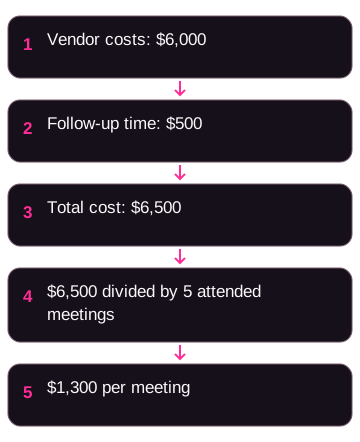
For the period you are reviewing, total the vendor bill and your team's follow-up costs. Divide that amount by attended meetings.
Include the provider fee for the period, setup allocated to that period, advertising spend if billed separately, staff time for follow-up and CRM work, and time to review ads, landing pages, scripts, and follow-up copy. Then count only meetings you can document as attended under your written definition.
Here's the math with made-up numbers.
For this example, the vendor fees for the period are $6,000. Follow-up takes ten hours at $50 an hour, which is $500. The total is $6,500. Five people attend meetings, so the cost per attended meeting is $1,300.
These are invented figures, not prices or results from Planswell, Apex Acquisition, or Advisor Jetpack. Your numbers will differ.
Then keep going. How many of those meetings became clients? What did it cost to bring each client in? How long will their fees take to cover that cost, after the expense of serving them?
In the example above, one new client would mean $6,500 in acquisition costs. No new clients would mean you've spent $6,500 without winning business yet. The cost per meeting alone can't tell you whether the spend paid off.
Timeframe matters as much as the unit. Five meetings in a quarter is a different cost story than five leads in a month. Use the same period for all three vendors, and allow for the lag between a first call and a signed client.
Do not turn AUM into revenue, or revenue into profit, to make the math look better. And do not use a guessed conversion rate to manufacture a return. Use documented costs and documented attended meetings only.
Before signing, put follow-up time on someone's calendar. Include that person's hours in the budget.
Check the contract, not just the sales page
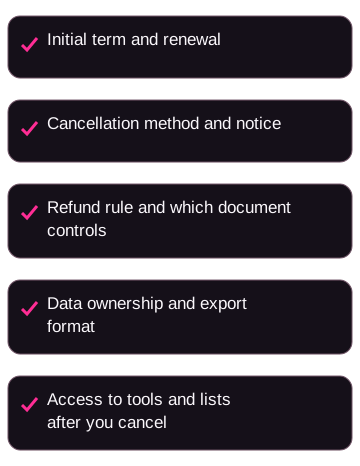
Price is only useful if you also know how long you are locked in, what you can cancel, and what you keep if you leave.
Ask each vendor:
- What is the initial term, and what happens when it ends?
- How do you cancel, and how much notice do you need?
- When can you get a refund, and when can you not?
- Who owns the prospect list, where it is stored, and in what format you can export it?
- What happens to CRM, training, software, or community access after you cancel?
If the initial term is longer than your test window, you may still be paying after you've already decided the service is not working. That is why term belongs on the worksheet next to price.
Ownership language on a marketing page is not the same as an export test. Ask for a written description of where prospect data lives, who may use it after cancellation, and how you obtain a copy. Then test that process before you rely on it.
If the sales page and the legal terms disagree, ask which document controls. Don't assume a refund will be available.
Post-cancellation access is not a minor admin detail. If the list and the tools disappear, you may be paying again to rebuild follow-up.
Reviews and case studies can't pick the vendor for you
Review scores, testimonials, and vendor case studies can prompt questions. They do not prove typical lead quality, conversion, or revenue for your firm. They do not tell you which of these three vendors will perform better for you.
If you want that snapshot, record the current rating, review count, and date in your own file. Don't treat those figures as your result. Individual reviews are one person's report. Provider testimonials and case studies are marketing claims. Map each claim to the written offer you are buying.
This is educational content for advisor firms buying marketing help. It is not investment advice, and it is not legal advice. OJay Media is a marketing agency. Advisors remain responsible for their own advertising review.
If you might republish a rating, testimonial, or performance figure on your own site, have your firm's compliance reviewer check it first. Registration and communication context decide which rules apply. Don't treat a vendor page, this article, or a review platform as permission to reuse that language.
Don't imply that ads, SEO, a provider, or a budget will produce clients. You're paying for a chance to connect with someone. They still have to choose to work with you.
A few common questions
How much does Advisor Jetpack cost right now?
Ask for a written proposal covering fee, setup, advertising budget, minimum term, refunds, and the delivery definition. Don't budget from a marketing page.
Does Planswell have one official price list?
Don't assume one public page is the rate card for your firm. If you see package displays, confirm which page, currency, segment, and package apply to you, including any setup fee. Treat those displays as unconfirmed until they appear in your written agreement.
Can I just compare the price per lead?
Use it as one part of the comparison. Include membership or subscription fees, setup, advertising spend if billed separately, follow-up time, and the number of meetings that actually happen. Then track how many people become clients. Don't mix households, leads, and attended meetings in that math.
Can review scores tell me which vendor will work better for my firm?
No. Review scores are snapshots of customer-submitted reports. They do not establish typical conversion or tell you which vendor will work better for your firm.
Is this a recommendation to hire OJay instead of these vendors?
No. This is a comparison worksheet. OJay Media is a marketing agency in the same broader category. Don't treat this page as a finding that OJay is interchangeable with Planswell, Apex Acquisition, or Advisor Jetpack.
Put the three proposals side by side
Request written proposals from all three companies, complete the worksheet, and name who on your team will follow up. If a term changes your costs or workload, settle it before you sign.
More comparisons for financial advisors
- Advisor Jetpack vs SmartAsset
- Apex Acquisition vs Advisor Jetpack
- Apex Acquisition vs SmartAsset
- Browse all comparisons