Agency Comparison

SmartAsset vs WiserAdvisor: Which Is Better for Financial Advisors? (2026)

By Oliwer Jonsson, Founder of OJay Media

Two of the oldest shared-lead platforms in the industry — but only one fits your practice. Pricing, lead quality, brand halo, and the honest unit economics on both.

Oliwer Jonsson, Founder of OJay Media
14 min read

One of these platforms has been matching consumers with advisors since the early 2000s. The other became a household name in personal finance with a domain authority above 80 and tens of millions of monthly readers.

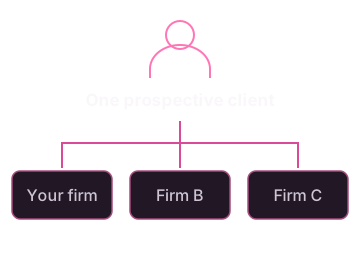
If you are a financial advisor comparing SmartAsset AMP and WiserAdvisor, you are evaluating two of the oldest shared-lead platforms in the industry. Neither is a fee-only gatekeeper like Zoe Financial. Neither runs done-for-you campaigns like Apex Acquisition. Both work on the same fundamental premise: consumers seeking financial guidance fill out a matching questionnaire, and advisors pay to receive that contact information.

Where they differ is in scale, pricing structure, lead behavior, and how much you will actually pay to test whether the model works for your practice.

I work with financial advisors on lead acquisition and pipeline strategy. I have audited what works and what does not across every major matching platform. This comparison gives you a clear answer so you can stop guessing and start making decisions with your budget.

Key Takeaways
  • SmartAsset AMP and WiserAdvisor both operate on a shared-lead model — the same contact goes to 2–3 advisors simultaneously.
  • SmartAsset uses a subscription + pay-per-click bidding model; WiserAdvisor uses simpler per-lead pricing.
  • SmartAsset wins on brand halo and scale; WiserAdvisor wins on lower entry cost and pricing clarity.
  • Neither is fiduciary-only. Neither produces appointment-level intent. Speed-to-lead is table stakes on both.

Quick Answer: SmartAsset vs WiserAdvisor at a Glance

Feature SmartAsset AMP WiserAdvisor
Founded2012 (AMP launched ~2014)~2003
Parent companyPublic Inc. (formerly SmartAsset Financial)Independent
ModelSubscription + pay-per-click biddingPay-per-lead
Lead exclusivityShared — same lead sent to 2–3 advisors same dayShared — matched to 2–3 advisors
PricingSubscription fee + per-click bids (not published)~$80–$150+ per lead (advisor forum estimates)
Minimum spendNot disclosed; significant subscription requiredLower barrier to entry
Vetting standardNo fiduciary requirementNo fee-only requirement
Brand recognitionVery high (DA 80+, tens of millions monthly readers)Moderate — industry-specific recognition
Network scaleOne of the largest consumer-facing platformsSmaller but established national network
Lead sourceSmartAsset.com organic + paid trafficWiserAdvisor.com traffic
Best forAdvisors who want high volume with strong follow-up systemsAdvisors seeking simpler per-lead pricing with lower entry cost

The Short Verdict

SmartAsset and WiserAdvisor are more similar than most advisors realize — and both require the same thing to work: a relentless, systematic follow-up process on shared leads.

SmartAsset wins on raw brand power. When a consumer finds SmartAsset through a Google search for "find a financial advisor" or reads one of their retirement planning articles, they land on a platform they recognize and trust. That brand halo does transfer some credibility to the matching process. SmartAsset AMP's subscription-plus-bidding model means advisors who are willing to spend more can secure more prominent placement — but the same lead still goes to two or three competitors.

WiserAdvisor has been operating longer than almost any other digital advisor-matching platform. Its pay-per-lead simplicity is genuinely easier to evaluate: you pay a set amount per contact, you work the contact, and you track your close rate. There is no subscription fee obscuring your per-lead economics.

Neither platform is fiduciary-only. Neither produces appointment-intent leads. Both send you a name and a phone number for someone who filled out a questionnaire — and often does not remember doing it, or spoke with two other advisors the same morning.

For advisors who want to understand how both platforms compare to alternatives, the landscape is covered in our SmartAsset vs Planswell breakdown, our Zoe Financial vs SmartAsset comparison, and our Zoe Financial vs WiserAdvisor analysis.


What Is SmartAsset AMP?

SmartAsset started as a personal finance content site. The company built a massive editorial operation covering retirement planning, taxes, mortgages, and investment basics. That content machine drove tens of millions of monthly visitors — and SmartAsset monetized that audience by building an advisor-matching layer on top of it.

AMP — the Advisor Marketing Platform — is the product advisors pay for. A consumer arrives at SmartAsset.com, reads an article about Roth conversions or retirement savings benchmarks, and at some point encounters the matching tool. They answer a questionnaire about their financial situation and goals, and SmartAsset matches them with up to three advisors in their geography.

SmartAsset was acquired by Public Inc. in 2023, transitioning from an independent fintech to a subsidiary of a publicly traded company. The infrastructure and product remained operational through the transition, but advisors should understand they are now paying a subsidiary of a larger financial services entity.

The AMP pricing model is not transparent. Advisors pay a subscription fee to access the platform, then participate in a pay-per-click bidding system for lead delivery. The more an advisor bids, the more leads they receive. This creates a dynamic where larger practices with more budget can dominate lead flow in their geographies — and smaller advisors can find themselves outbid consistently. Published pricing does not exist on the SmartAsset website. Advisors on the Kitces community forums report total annual costs ranging from $20,000 to $60,000 or more depending on geography and competition level.

The brand halo is real — but do not mistake it for intent. SmartAsset's domain authority above 80 means their content ranks prominently for high-value financial search queries. A consumer who finds SmartAsset through a Google search is likely a real person with genuine financial curiosity. What that does not mean is that they are ready to hire an advisor this week, or that they will remember filling out the matching questionnaire when you call.

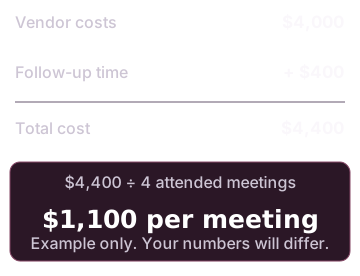
I reviewed the pipeline data for an advisory practice spending approximately $3,000 per month on SmartAsset AMP. Out of 48 leads delivered over 90 days, they reached 14 on the phone. Of those 14, four agreed to an initial meeting. One became a client. The math worked — barely — because that one client had $800,000 in investable assets. The same math does not work if your average client account is $150,000.
SmartAsset AMP Key Facts
  • Parent: Subsidiary of Public Inc. since 2023
  • Domain authority: 80+ — one of the highest in personal finance
  • Pricing model: Subscription + pay-per-click bidding (no published rate card)
  • Lead exclusivity: Shared with up to 2–3 advisors simultaneously
  • Vetting: No fiduciary or fee-only requirement for advisors
  • Traffic source: Content (organic search) + paid media

What Is WiserAdvisor?

WiserAdvisor is one of the oldest digital advisor-matching services in the United States, with roots going back to approximately 2003. That is not a trivial distinction — two decades of operation in a space that has seen dozens of platforms launch and fail is evidence of a functional business model and a stable advertiser base.

The consumer experience is similar to SmartAsset's: a visitor arrives at WiserAdvisor.com, answers questions about their financial situation and advisor preferences, and is matched with a set of advisors in their area. Advisors pay per lead received.

WiserAdvisor's pricing is simpler. Unlike SmartAsset's subscription-plus-bidding system, WiserAdvisor operates primarily on a pay-per-lead basis. Advisors on industry forums (the Kitces community, financial advisor Reddit, NAPFA forums) report per-lead costs in the $80–$150+ range depending on geography, lead qualification level, and package. These are community estimates, not official rate card figures — WiserAdvisor does not publish pricing publicly.

The network is broader but smaller in scale. WiserAdvisor does not require advisors to be fee-only or fiduciary-only. This makes the platform accessible to a wider range of practitioners — commission-based advisors, insurance producers with securities licenses, and RIAs alike. The tradeoff is that consumers on the platform may also be matched with a broader range of advisor types, which can create noise in the matching process.

The lead sharing model mirrors SmartAsset. Consumers are typically matched with two to three advisors. The moment you receive a WiserAdvisor lead, your competitors received the same name and phone number. Speed to follow-up is the primary differentiator — advisors who call within five minutes of lead delivery dramatically outperform those who call three hours later. Research from the FINRA Investor Education Foundation and industry data consistently show that lead contact rates drop by more than 80% within the first hour of delivery.

For context on how WiserAdvisor compares against a fee-only platform, our Zoe Financial vs WiserAdvisor article covers that comparison in depth.

WiserAdvisor Key Facts
  • Founded: ~2003 — one of the oldest advisor-matching platforms in the US
  • Pricing model: Pay-per-lead ($80–$150+ per lead based on advisor forums)
  • Network: Broad — no fee-only or fiduciary-only requirement
  • Lead exclusivity: Shared with 2–3 advisors simultaneously
  • Entry cost: Lower barrier than SmartAsset AMP (no large subscription required)
  • Traffic source: WiserAdvisor.com organic and paid sources

Pricing: What You Actually Pay

This is where the comparison gets uncomfortable — because neither platform makes pricing easy to evaluate.

SmartAsset AMP: Advisors pay a subscription fee (which functions as a platform access cost) plus per-click bids for lead allocation. The subscription alone can run several hundred to several thousand dollars per month before a single lead is delivered. Total annual investment commonly reported by advisors ranges from $18,000 to $60,000+ depending on market competition and bid strategy. This model means your cost-per-lead is variable and can increase as competition increases in your geography.

WiserAdvisor: The per-lead model is structurally simpler. You pay a defined amount per contact delivered. At $80–$150 per lead (forum estimates), a budget of $2,000 per month produces roughly 13–25 leads. At a realistic contact rate of 30–40%, that is 4–10 live conversations. At a meeting-to-conversation rate of 25–35%, that is 1–3 initial meetings per month. Whether those meetings convert depends entirely on your sales process, your niche, and how well the leads match your ideal client profile.

The honest comparison: SmartAsset's subscription model makes the per-lead cost opaque. WiserAdvisor's per-lead model makes the unit economics clearer. For advisors who want to test a platform without a large upfront commitment, WiserAdvisor is the lower-risk entry point. For advisors who have already validated a shared-lead model and want maximum volume, SmartAsset's scale and brand recognition justify the higher investment — if the follow-up infrastructure is in place.

Neither platform discloses a formal rate card. Before committing to either, request a complete cost breakdown in writing, including: what constitutes a billable click or lead, credit/replacement policies for low-quality contacts, and what happens to your subscription if lead volume falls below projected levels.


Mid-Article Check-In. Tired of paying two or three competitors to fight over the same consumer? OJay Media builds advisor-owned pipelines — your brand, your leads, your database. See how we work.


Lead Quality: What to Actually Expect

Lead quality on both platforms is shaped by the same structural reality: these are consumers who completed a questionnaire, not consumers who booked an appointment with an advisor. The intent gap between those two states is significant.

On SmartAsset: The organic search traffic that populates SmartAsset's consumer pool is genuinely high quality in terms of financial engagement. A person who finds SmartAsset by searching for "how much do I need to retire" has some level of financial awareness. The problem is that the journey from "reading about retirement" to "completing an advisor-matching form" to "ready to hire an advisor now" is not linear. Many consumers complete the matching tool out of curiosity or as a low-stakes first step, not because they are actively shopping for an advisor.

Advisor forums consistently report the following patterns on SmartAsset leads:

On WiserAdvisor: The lead quality dynamics are similar but the consumer profile may differ. WiserAdvisor's audience tends to be more specifically advisor-seeking (they came to a platform designed for advisor matching rather than a general personal finance site), but the platform's smaller scale means less consumer traffic overall. Advisors report contact rates in the 25–40% range and describe leads as "warm but not urgent."

The shared-lead problem applies equally to both. If a consumer submits their information at 9 AM and is matched with three advisors, the advisor who calls by 9:15 AM is in a fundamentally different conversation than the advisor who calls at 2 PM. Speed-to-lead is not a differentiator — it is table stakes. If your practice cannot support same-day (ideally sub-15-minute) follow-up during business hours, neither platform will perform to its potential.

For advisors exploring alternatives to the shared-lead model, our Advisor Jetpack vs SmartAsset comparison covers a platform with a different lead exclusivity structure.


Brand and SEO Halo: Why SmartAsset Has a Structural Advantage

This section matters more than most comparison articles acknowledge.

SmartAsset has built one of the most powerful content moats in personal finance. With domain authority above 80 and a publishing operation that produces hundreds of articles per month on retirement, taxes, investing, and financial planning, SmartAsset appears prominently in Google results for nearly every high-intent financial query. That organic presence creates a self-reinforcing cycle: more traffic means more consumers entering the matching tool, which means more leads available for advisors on the platform.

WiserAdvisor does not have that content infrastructure. Their consumer traffic depends more heavily on direct traffic from brand searches and some paid media. The platform's 20+ years of operation gives it credibility with consumers who specifically search for advisor-matching services, but it does not have the same ambient brand presence that SmartAsset has built through content.

What this means for advisors: When a SmartAsset lead calls you back, they sometimes already know who SmartAsset is. There is a pre-existing layer of trust with the platform that can make the initial conversation slightly warmer. That trust transfers to you because SmartAsset vetted you for their platform. With WiserAdvisor, you are less likely to get that ambient familiarity — the conversation starts from a colder baseline.

This difference is real but modest. It does not change the fundamental reality that both platforms send shared leads to multiple advisors. Brand halo helps marginally; execution determines everything.

The SEO and brand dynamic cuts both ways for advisors. Articles ranking on SmartAsset.com about topics like how to attract high-net-worth clients or how to get clients as a wealth manager are reaching your potential clients. That is SmartAsset capturing your audience — and keeping it until they decide to run it through the matching engine. Building your own content presence is the long-term counterweight to platform dependency.


Results: What Advisors Actually Report

There is limited published case study data for either platform. What exists comes primarily from advisor community forums, Kitces research posts, and individual conversations rather than platform-published results.

SmartAsset AMP — from advisor community reporting

WiserAdvisor — from advisor community reporting

What neither platform publishes: Verified, auditable ROI data broken down by geography, advisor niche, and follow-up speed. Both platforms benefit from the fact that poor conversion is easy to attribute to advisor execution rather than lead quality. Before signing with either platform, ask for the average close rate among advisors in your geographic market and asset tier. If they cannot or will not provide that data, that is informative.


Choose SmartAsset AMP If...

Choose WiserAdvisor If...

Consider Neither If...

You want exclusive leads, appointment-level intent, or a platform that builds your personal brand rather than the platform's brand. For those requirements, the comparison landscape is different — our Planswell vs WiserAdvisor piece covers a platform with exclusive matching, and our how to get clients as a wealth manager guide covers building a pipeline that belongs to you.


Frequently Asked Questions

Is SmartAsset worth it for financial advisors?
It depends entirely on your follow-up infrastructure and your typical client asset level. Advisors spending $30,000–$50,000 per year on SmartAsset AMP and closing even 2–3 high-asset clients can justify the economics. Advisors expecting warm, high-intent leads without a systematic outbound follow-up process consistently report poor results. The platform delivers volume — converting that volume is your responsibility.
How much does WiserAdvisor cost per lead?
WiserAdvisor does not publish a public rate card. Advisors on community forums (Kitces, advisor Reddit, NAPFA boards) report per-lead costs in the $80–$150+ range depending on geography and package. Request a written quote and verify what constitutes a billable lead, what the credit policy is for invalid contacts, and whether the cost is fixed or variable.
Are SmartAsset leads exclusive?
No. SmartAsset AMP operates on a shared-lead model. When a consumer completes the matching questionnaire, their contact information is sent to up to three advisors in the same geography. You are in direct competition with those advisors from the moment the lead is delivered. Speed to follow-up is the primary differentiator.
Are WiserAdvisor leads exclusive?
No. Like SmartAsset, WiserAdvisor matches consumers with multiple advisors. The exact number can vary by package and geography. Assume shared unless the platform explicitly confirms exclusive delivery in writing.
How is SmartAsset AMP different from the SmartAsset website?
SmartAsset.com is the consumer-facing content and tools platform (retirement calculators, tax guides, mortgage comparisons, etc.). SmartAsset AMP — the Advisor Marketing Platform — is the separate product advisors pay for to receive leads generated by that consumer traffic. You cannot advertise on SmartAsset.com in the traditional sense; you participate in the AMP program and receive lead allocations based on your subscription and bidding activity.
Does WiserAdvisor require advisors to be fiduciaries?
No. WiserAdvisor accepts a broad range of advisor types, including commission-based advisors and those without fiduciary status. This contrasts with platforms like Zoe Financial, which requires fee-only, fiduciary-only RIAs. If you have a CFP designation, FINRA registration, or RIA status, you can apply. Check CFP Board's code of conduct standards for clarity on how your credentials affect platform eligibility and client trust.
Can I run both SmartAsset AMP and WiserAdvisor at the same time?
Yes, but only if your follow-up infrastructure can handle the combined volume. Running two shared-lead platforms simultaneously means receiving leads from both sources and competing with 4–6 other advisors across both channels simultaneously. If you cannot respond to leads within 15 minutes during business hours, adding a second platform will not improve your results — it will just increase your spend. Build a functional process on one platform first, then add a second.
What is the SEC's position on advisor-matching platforms?
The SEC has issued guidance on the use of solicitor arrangements and paid referral services. Advisors participating in platforms like SmartAsset AMP and WiserAdvisor should review the SEC's rules on investment adviser marketing to confirm compliance with disclosure requirements when leads originate from paid platforms. FINRA-registered advisors should also confirm that platform participation aligns with their broker-dealer's policies on outside business activities.

About the Author

Oliwer Jonsson is the Founder of OJay Media, a performance marketing agency specializing in financial services. He works with financial advisors, RIAs, and wealth management firms to build predictable client acquisition pipelines through paid media, SEO content, and lead generation strategy. His work spans advisor-matching platform audits, paid advertising buildouts, and content programs designed to reduce dependence on third-party lead vendors.

Ready To Stop Renting Leads?

Build a lead pipeline that belongs to you — not a platform.

Both SmartAsset AMP and WiserAdvisor work on the same model: pay to rent access to consumers who filled out a form on someone else's platform. When you stop paying, the leads stop. The advisors who build durable practices are the ones who invest in owned channels alongside rented ones. No pitch. A straight assessment of what your numbers can support.

Book a Strategy Call With OJay Media

A no-pitch call. We'll tell you what questions to ask any platform you're evaluating.

Disclaimer: Pricing figures cited in this article are derived from advisor community forums, published research, and industry estimates. Neither SmartAsset nor WiserAdvisor publishes official rate cards. Verify all pricing directly with each platform before making a commitment. This article is written by OJay Media, a financial advisor marketing agency and a direct competitor to some platforms discussed here. Every effort has been made to be accurate and balanced. Nothing in this article constitutes financial, legal, or investment advice.